
A ship spends its working life with the most engineered part of itself out of sight. Hull plating, rudder, propellers: all of it underwater, all of it invisible to anyone standing on the wharf.
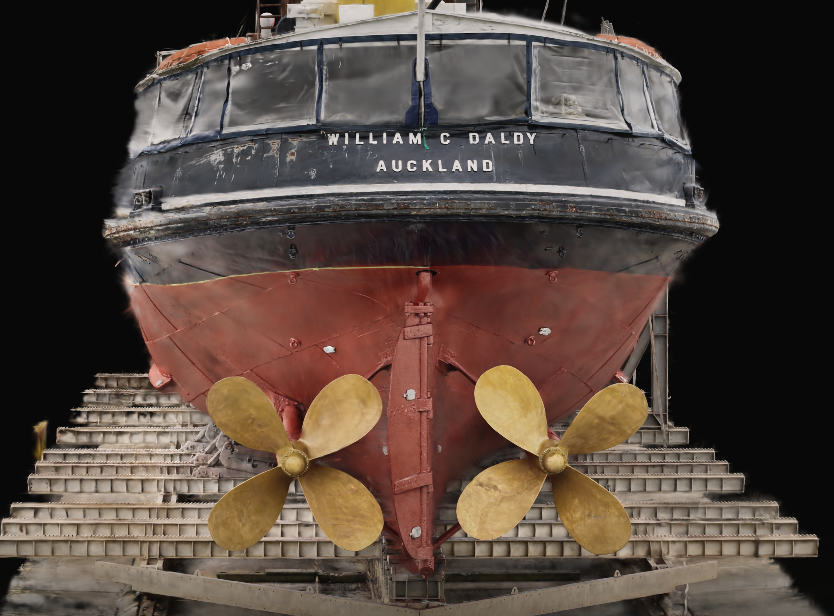
For a few days this month, the William C. Daldy sat high and dry on the slipway at Heron Ship Repair in Whangārei, lifted clear of the harbour for survey and repair. Her twin bronze propellers, each one taller than a person, were out in the open air. So was the riveted red hull that has pushed her through the Waitematā since 1935.
That is a rare window, and a short one. We recorded her there in photorealistic 3D, above and below the waterline, so the whole vessel exists as one continuous record rather than only the half the public ever sees. The propellers in the image at the top of this post are not a photograph looked at from one fixed angle. They are part of the model, and you can move around them.
The repairs finished on 11 September, and she went back into the water at first light that morning.
You can explore the William C. Daldy now.
A note from the founder
This was a genuinely unique experience. Visiting the slipway and seeing the repair work up close was incredible, and what stayed with me was the people: an outstanding team of engineers and volunteers, all of them giving their time and skill to keep a 1935 steam tug alive and working.
Special thanks to John Pratt and to the team at Heron Ship Repair for this collaboration. Access like this is not something you can arrange twice, and they made it possible.