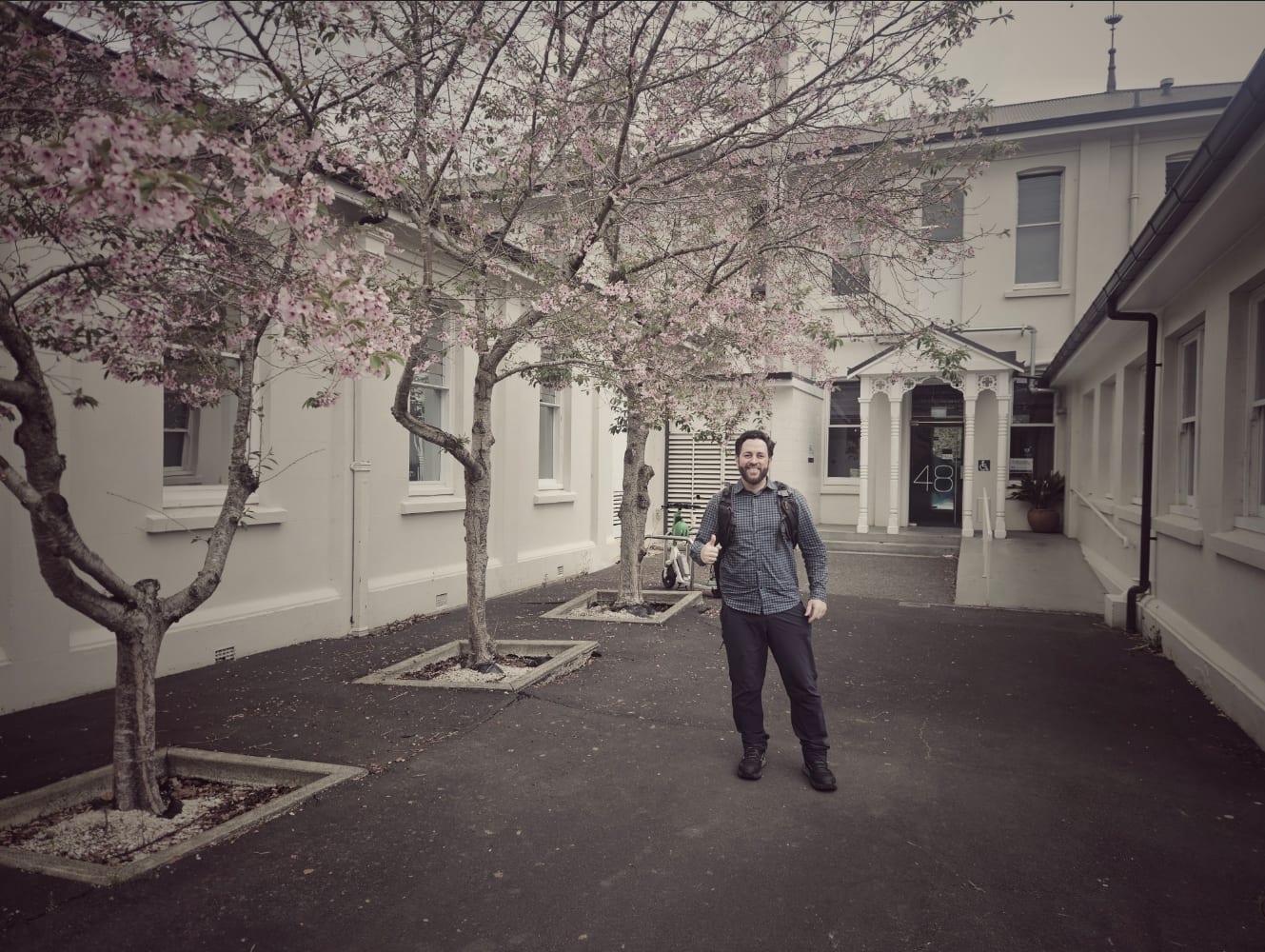
I was invited to Unitec’s School of Architecture, in Building 48, to speak to students about the future of as-built assets. It was a real privilege to stand in a room of future architects and talk about how the buildings around us are recorded, remembered and managed.
The idea I opened with is simple. Every building is two assets: the physical one, and its data. The data decides how well that building can be designed, altered, maintained and remembered. Yet information gets lost in the same three places again and again. Drawings describe what was planned. Sites change during construction, and again every year of use. Then handover arrives as folders of files rather than data linked to the asset itself. Spatial data closes that gap by recording what is actually there.
We went through how existing assets are captured today, how that raw capture becomes usable data, and how to choose the right format for the question being asked, not the one that looks best. We also talked about digital twins and why a twin is only as good as the data behind it.
To show what this looks like in practice, I walked the students through our recent Clark Cottage project in Hobsonville. This is the early stage of the work: the photos taken on site are lined up so that every picture has a known position, and the software builds a cloud of coloured points from what it matched between them. Even at this stage you can read the house, the chimneys, the paths and the garden beds.
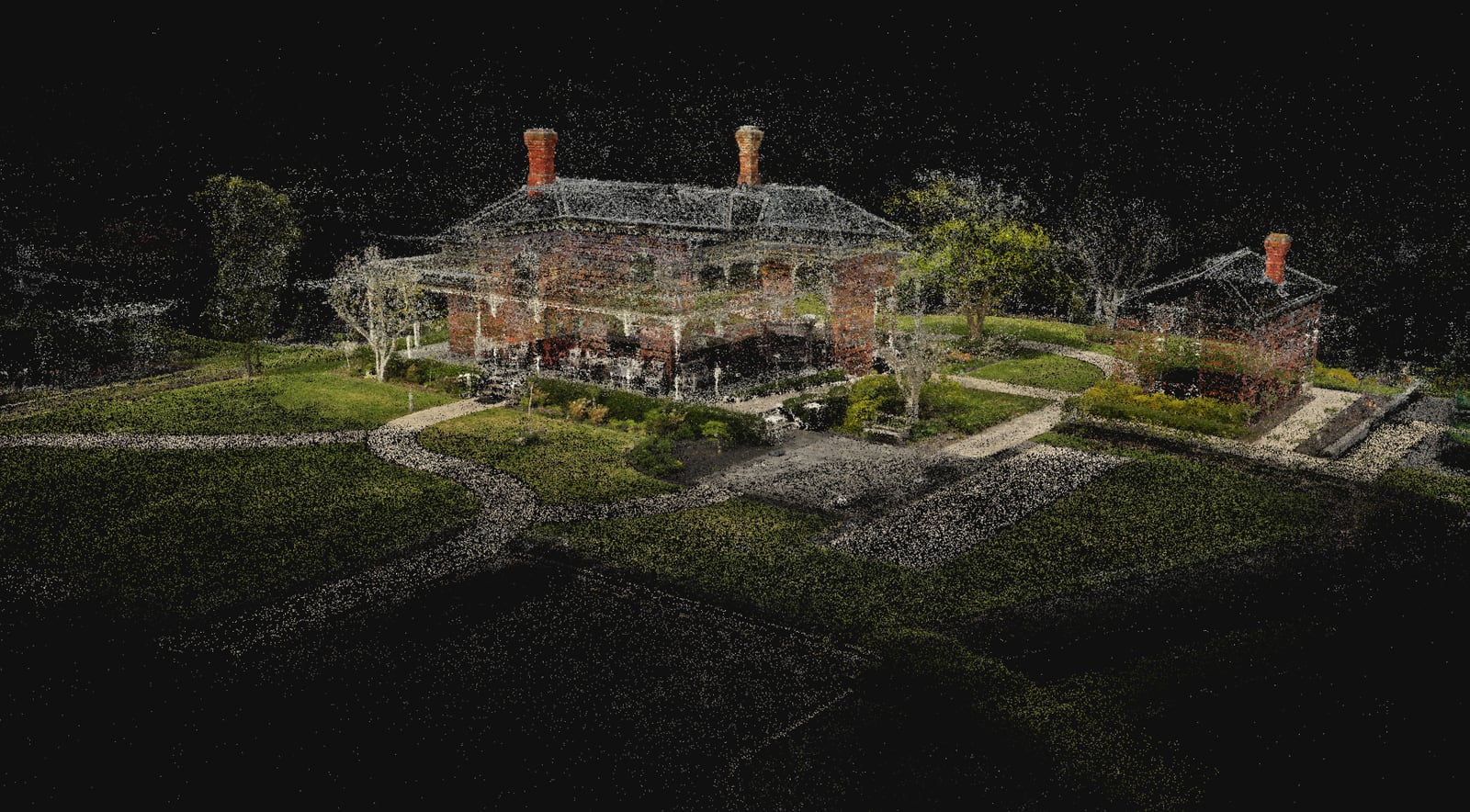
Clark Cottage data-set. Explore the finished 3D model of Clark Cottage.
Sharing how the data is made, and not only the finished 3D result, is part of our approach. Understanding how a record is built is the first step to knowing how far to trust it and what it can be used for. A record like this exists before any restoration, alteration or loss. It can be measured, revisited and compared over time, and it can serve architects, engineers and owners alike. When a story is attached, people can experience a place instead of only inspecting it. That is where the value is.
The message I most wanted the students to take away is this: go beyond the brief. Deliver what you were hired for, then help the owner understand the data, how far to trust it, and how to keep it alive. Owning the problem from end to end is what turns a deliverable into a well-managed asset.
Education and collaboration are central to how Tohu Heritage works. We want the records we make to be useful to the people who study and care for these places, so I put together a resource page for the students, with a searchable FAQ on the main topics from the talk, short videos, and a guide to free software. It is open to anyone at tohuheritage.nz/unitec. I would like to keep working with the School of Architecture and the Digital Heritage Research Centre on more of this, and I am open to the same kind of conversation with other schools, universities and heritage organisations.
A Note of Thanks
Thank you to Renata Jadresin Milic, Associate Professor, and Founder and Director of the Digital Heritage Research Centre at Unitec, for the invitation and for her continued support. Thank you also to Graeme McConchie, Senior Lecturer in the School of Architecture, for trusting my work in front of your students. It means a great deal to me.
Learn more about the Digital Heritage Research Centre on the Unitec website.